Optometrist on OnlyFans: OD Licensing Board Risk, AOA Ethics, and Identity Protection
Aruna Talent Team
Creator economy experts · $10M+ annually total creator revenue
Last updated: May 28, 2026
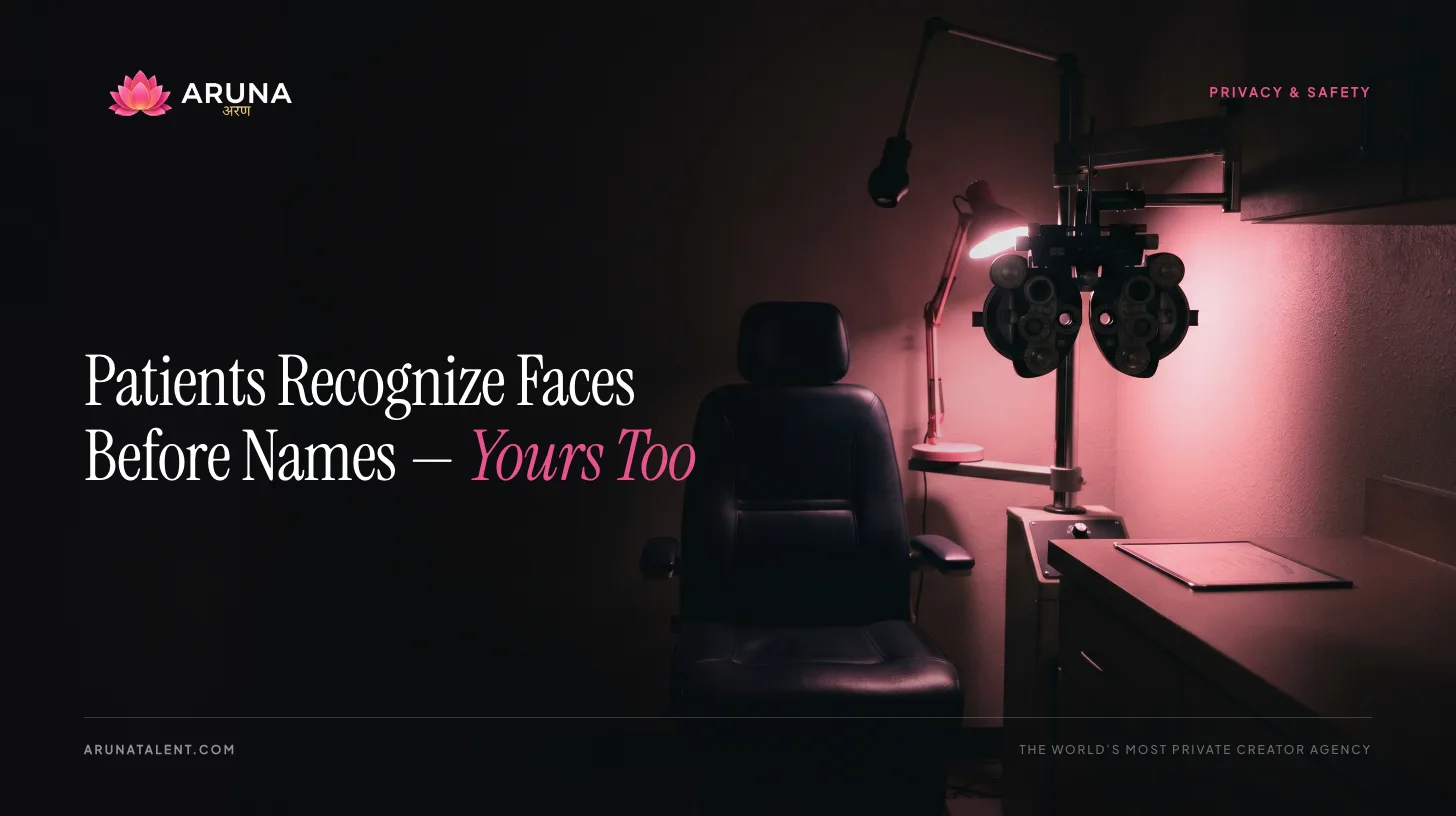
Optometrists occupy a distinctive position among healthcare professionals who create content on OnlyFans. As licensed doctors of optometry, ODs are subject to state licensing board oversight, professional association ethics standards, and, for the majority who work in employer-managed settings, corporate employment policies. Understanding each layer of risk and how they interact is essential before or during any creator activity.
State Optometry Licensing Boards
Optometry is regulated at the state level. Every practicing OD holds a license issued by their state’s board of optometry, and that license is the professional credential that authorizes them to practice. State boards have broad authority to investigate unprofessional conduct, with standards that vary considerably by jurisdiction.
No state optometry board has a specific rule prohibiting adult content creation. However, most state optometry practice acts include provisions authorizing discipline for conduct constituting moral turpitude, gross immorality, or unprofessional behavior: language broad enough to support a complaint if a board chooses to investigate.
The practical trigger for board action is almost always a complaint. Boards do not proactively monitor the internet for licensees. A complaint filed by a patient, a colleague, a competitor, or a member of the public is what initiates an investigation. If a complaint is filed and your creator identity is linked to your OD license, you face the cost and disruption of a board investigation regardless of outcome. Maintaining a complete separation between your professional identity and your creator identity is therefore not optional risk mitigation. It is the foundational requirement.
The AOA Code of Ethics (American Optometric Association)
The American Optometric Association publishes a Code of Ethics that governs members’ professional obligations. Key provisions address duties to patients, obligations to preserve public health, and the expectation that optometrists conduct themselves in ways that reflect well on the profession.
The AOA does not have jurisdiction over your license. AOA membership is voluntary, and ethics violations within the association result in membership-level consequences, not license revocation. However, AOA ethics complaints can be referred to state boards, and the ethical standards articulated in the code are often cited in board proceedings as evidence of prevailing professional norms even for non-members.
The practical implication: AOA membership adds a secondary exposure pathway but is not the primary risk vector. State board complaints remain the core concern.
Employer Risk by Practice Setting
Practice setting determines employer risk almost entirely.
Solo and independent group practice. ODs who own their practice face no employer-side termination risk. Their exposure is limited to board complaints, patient attrition if identity is disclosed, and the general reputational dynamics of their local market. This is the lowest-risk employment structure for a creator, though it does not eliminate licensing risk.
Optical chains. The majority of employed ODs in the United States work inside or adjacent to optical retail chains: LensCrafters (owned by Luxottica/EssilorLuxottica), Visionworks, MyEyeDr, Walmart Vision Centers, and Costco Optical. These organizations have formalized HR compliance functions and employment contracts that typically include professional conduct and outside activity clauses. Discovery of adult content creation is grounds for termination in most corporate employment agreements, and large retail optical operators have both the resources and the incentive to act. ODs employed by these chains face meaningful employment risk in addition to licensing exposure.
Academic and hospital settings. ODs employed by academic medical centers, VA facilities, or hospital systems face institutional conduct standards similar to those applicable to MDs in those settings. Discovery risk is compounded by the institutional compliance infrastructure these employers maintain.
Patient Recognition (Annual Exam Relationship)
The optometrist-patient relationship is built on annual contact. Unlike a primary care physician seen multiple times per year, or a dentist operating on a twice-annual hygiene schedule, most established optometry patients return to see their OD once per year for a routine dilated exam or refraction.
This lower contact frequency reduces, but does not eliminate, recognition risk. Patients who return annually over many years develop genuine familiarity with their OD’s face, voice, and manner. In smaller markets or suburban practices with a stable, long-tenured patient population, the likelihood that a patient encounters your content and recognizes you is non-trivial.
The annual appointment also creates a particular interpersonal dynamic: the exam involves close physical proximity, dim lighting, and direct face-to-face interaction as you operate the phoropter and slit lamp. Patients retain clearer physical memories of their OD than they might of a provider they interact with more formally or at greater distance.
Optometry-Specific Content Environment Risks
Standard identity protection advice covers face masking and avoiding identifiable personal details. For optometrists, the clinical environment itself is a significant secondary identifier. The following equipment and visual elements are immediately recognizable to anyone who has had an eye exam, including every patient you have ever seen:
- Phoropter: the large, round refraction instrument mounted on a swing arm in front of the exam chair. No other clinical specialty uses this device.
- Slit lamp biomicroscope: the distinctive microscope with a chin rest used for anterior segment examination.
- Trial lens sets: trays of individual corrective lenses used in manual refraction.
- Adjustable exam chair: the specialized reclining chair in an optometry lane.
- Visual acuity chart: whether physical or projected, immediately diagnostic of the setting.
- Dispensing frame displays: wall-mounted or freestanding eyeglass frame boards visible in exam rooms adjacent to optical dispensaries.
Any of these elements appearing in content, even in the background, identify the clinical profession. Film all content in personal, non-clinical spaces and audit backgrounds carefully before publishing.
Identity Protection Framework
For optometrists, an effective identity protection framework includes:
Account separation. Create OnlyFans and all associated promotional accounts under a stage name with no phonetic or visual similarity to your real name. Use a dedicated email address and payment method with no link to your professional identity.
Device and network hygiene. Access creator platforms exclusively from personal devices on personal networks, never from clinic devices, the clinic network, or employer-managed systems. Use a VPN to prevent IP-based geolocation.
Geographic restriction. Enable geoblocking for your home state and any adjacent states where your patient base is concentrated. This does not eliminate risk but reduces the probability of patient discovery.
Data broker suppression. Opt out of major data broker listings that aggregate names, addresses, and professional license information. Services that index state licensing records can surface your professional identity in searches connected to a username if any data point overlaps.
Periodic identity audit. Run reverse image searches on any content you have published and review whether your stage name returns results connected to your professional identity. Audit quarterly.
How Aruna Talent Supports Licensed Healthcare Professionals
Aruna Talent manages creators who hold professional licenses in healthcare. We understand the specific risk structure for optometrists: the state board complaint pathway, the employment risk gradient across solo practice and retail optical chains, the patient recognition dynamic in annual-exam relationships, and the equipment-specific identifiers unique to optometry exam environments.
We build identity protection and content strategy around those constraints from the start, not as an afterthought. If you are an optometrist considering OnlyFans, or already active and concerned about your current exposure, contact Aruna Talent to assess your risk profile and implement appropriate protective measures.
Related guides for licensed healthcare professionals:
- Doctor on OnlyFans
- Dentist on OnlyFans
- Physical Therapist on OnlyFans
- Pharmacist on OnlyFans
- Chiropractor on OnlyFans
Building this alone caps how far it goes. Aruna Talent runs content strategy, daily fan messaging, growth, and privacy protection for 60+ creators. See if you qualify →. It takes about a minute, and a straight no is a useful answer too.
Ready to take your content career seriously?
Apply in a few minutes. No upfront cost. No obligation. Not ready? The free Creator Kit gets you started on your own terms.
60+ creators · $10M+ annually total revenue
You Already Know What's Possible. Now Find Out If It's Possible for You.
$20K+ your first week, that's our target, backed by 60+ launches. No followers needed. Your real name, family and location stay private, and a dedicated team drawn from a company of 100+ runs your growth. The only question is whether you apply.
See If You Qualify →No upfront cost · No obligation
How Aruna Can Help