Receptionist on OnlyFans: Job Risk & Anonymity
Aruna Talent Team
Creator economy experts · $10M+ annually total creator revenue
Last updated: May 29, 2026
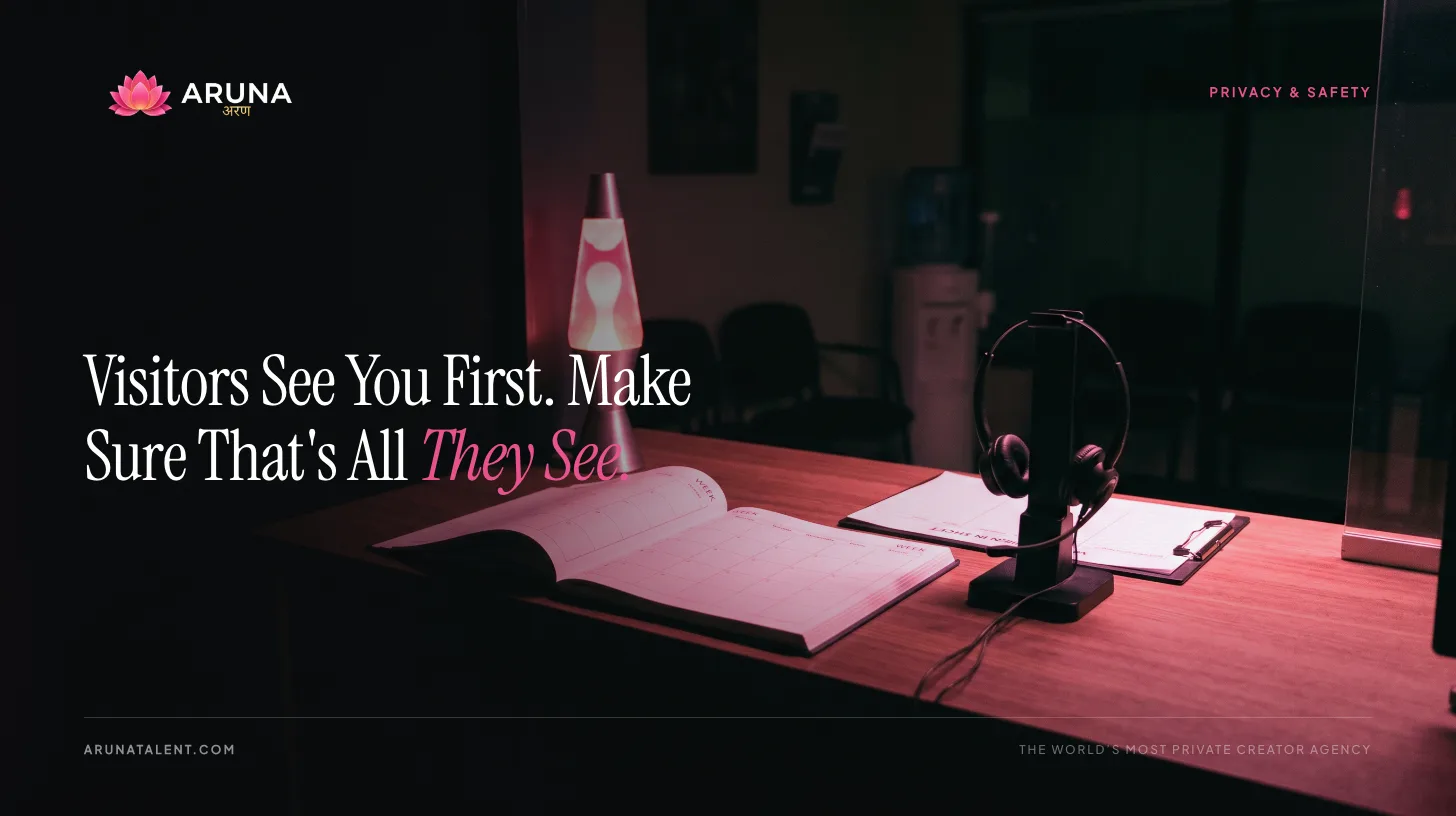
Receptionists occupy a distinctive position in the employment-risk landscape: no professional license creates a board complaint pathway, but the front-desk role is the most publicly visible position in any organization. Every person who walks through the door interacts with the receptionist, and over time, those interactions create recognition relationships in both directions.
The risk is entirely employment-based. Managing it well means understanding which employer environments carry the most immediate exposure and which recognition vectors are most likely to create discovery.
Employment Risk: No License, All Employer
There is no state licensing board for receptionists. No credentialing body maintains disciplinary authority over off-duty conduct. The entire professional risk runs through the employment relationship.
This doesn’t mean the risk is low. It means it’s immediate and employer-specific. When a licensed professional’s account is discovered, there’s typically a layered process: employer response, then potential board complaint, then investigation. For receptionists, discovery skips directly to the employer response phase.
The practical consequence is that the speed and severity of the employer response depends entirely on the organization. Some employers maintain written conduct policies that explicitly cover outside activities and professional reputation. Others operate on owner discretion. The outcome of discovery varies accordingly.
Employer Risk by Workplace Type
Medical office receptionists work in the most sensitive environment on this list. Physician practices, dental offices, and other healthcare settings operate with conduct expectations shaped by patient trust and HIPAA-adjacent professional culture. Healthcare employers are accustomed to handling staff conduct matters with HR formality. Discovery at a medical office typically moves quickly through established HR processes. The concern is patient trust and practice reputation, two things healthcare employers protect aggressively.
Corporate office receptionists face business visitor, client, and vendor recognition risk along with company brand standards. Large corporations have formal HR infrastructure and written conduct policies. Discovery at a Fortune 500 employer or a professional services firm follows a documented process. The employer’s concern is professional brand representation: receptionists are the literal first impression of the organization.
Law firm receptionists interact with clients, attorneys from other firms, court officials, and opposing counsel. Law firms are sensitive to professional image in ways that shape how they respond to staff conduct matters. A firm’s reputation with clients and in the legal community is a business asset, and anything perceived as a threat to that reputation is handled formally.
Hotel and hospitality front desk staff face guest recognition across multi-night stays. Guests who check in for three or four nights develop a clear recognition relationship with desk staff they’ve interacted with multiple times. Hospitality employers also have brand standards tied to property ratings and guest experience expectations.
Independent business receptionists (small offices, single-owner practices, boutique firms) face direct owner determination. There’s no HR department, no written policy review process. Discovery leads immediately to a personal conversation with the business owner, and the outcome depends entirely on that individual.
The Front-Desk Recognition Problem
The receptionist role creates a specific and underappreciated recognition dynamic: it’s the only role in most organizations where staff interact with every single person who enters the building.
A back-office accountant might know a handful of people in the building. The receptionist knows everyone, every vendor, every client, every regular visitor, every delivery person, every job candidate who comes in for an interview.
This creates a large and continuously refreshed recognition pool. Regular visitors (clients who come in monthly, vendors on weekly delivery routes, service contractors) develop face-recognition familiarity over hundreds of interactions. The familiarity runs both ways: the receptionist recognizes them, and they recognize the receptionist.
The practical implication for OnlyFans is that the passive discovery risk is higher for front-desk roles than for most non-patient-facing office positions. A vendor who visits a corporate reception desk every Tuesday for a year and also browses OnlyFans creates a real passive discovery vector, not through any active search, but through simple recognition of a familiar face.
Geographic blocking is particularly important for receptionists because the visitor and client base is almost entirely local. The person most likely to browse OnlyFans and recognize the reception desk staff lives within commuting distance of the office.
Workplace Environment Identifiers
Reception environments carry organizational identifiers that are more visible and more recognizable than most workplaces:
Company signage. The reception desk is typically the primary branding surface in a lobby, company logos, signage, and branded elements are mounted at or above the desk, directly in frame for anyone photographed or filmed at a reception desk. These are among the most immediately recognizable organizational identifiers.
Reception desk and lobby aesthetics. Lobby furniture, desk configurations, architectural features, and design aesthetics are recognized by regular visitors. A distinctive lobby (particular flooring, branded reception counter, recognizable art) can identify the specific organization to anyone who has visited it.
Professional directories. Many organizations list front-desk staff in employee directories, company websites, or LinkedIn company pages with photos. This creates a documented visual record that can be cross-referenced against creator content through reverse image search.
Branded attire and accessories. Company-branded uniforms, lanyards, name badges, and desk accessories visible in content create direct identification risk for anyone who recognizes the branding.
The solution is strict environment control: no workplace settings, no company-branded items, no backgrounds that carry organizational visual signatures.
Identity Protection Framework
Pseudonym with no employer connection. The creator name should have no connection to your real name, employer name, industry, or job title. Don’t reference the workplace, administrative work, or any professional context in your creator identity.
Geographic blocking. Block the city where your employer operates. For receptionists at organizations with multiple locations, block all locations where you’re known. The visitor and client base is local, blocking the local geography closes the primary passive discovery pathway.
Content environment control. No office settings, no reception desk aesthetics, no company-branded items, no workplace uniforms. Any visual element that a regular visitor might recognize, including generic office furniture they’ve seen in your specific lobby, is a risk.
Professional online presence separation. If you appear in company marketing materials, employee directories, or LinkedIn with professional photos, keep the creator identity entirely separate. Different email, different devices, no visual overlap with any documented professional presence.
Device separation. A dedicated personal device for account management, never used for work email, work systems, or any employer-connected application.
How Aruna Talent Supports Administrative Professionals
Aruna Talent works with creators across employment-risk profiles, including front-desk and administrative roles where the risk runs directly through the employer rather than through a licensing board.
The privacy infrastructure is built for the specific vectors that matter: geographic blocking from local visitor and client pools, pseudonym systems that prevent professional name searches, and content environment protocols that eliminate workplace identifiers from any content that goes live.
Related guides:
- Paralegal on OnlyFans: law firm conduct policies and legal professional identity protection
- Dental Assistant on OnlyFans: medical office employment risk and patient recognition
If you’re ready to explore full-service management with privacy infrastructure built for your professional situation, apply to work with Aruna Talent.
Ready to take your content career seriously?
Apply in a few minutes. No upfront cost. No obligation. Not ready? The free Creator Kit gets you started on your own terms.
60+ creators · $10M+ annually total revenue
You Already Know What's Possible. Now Find Out If It's Possible for You.
$20K+ your first week, that's our target, backed by 60+ launches. No followers needed. Your real name, family and location stay private, and a dedicated team drawn from a company of 100+ runs your growth. The only question is whether you apply.
See If You Qualify →No upfront cost · No obligation
How Aruna Can Help